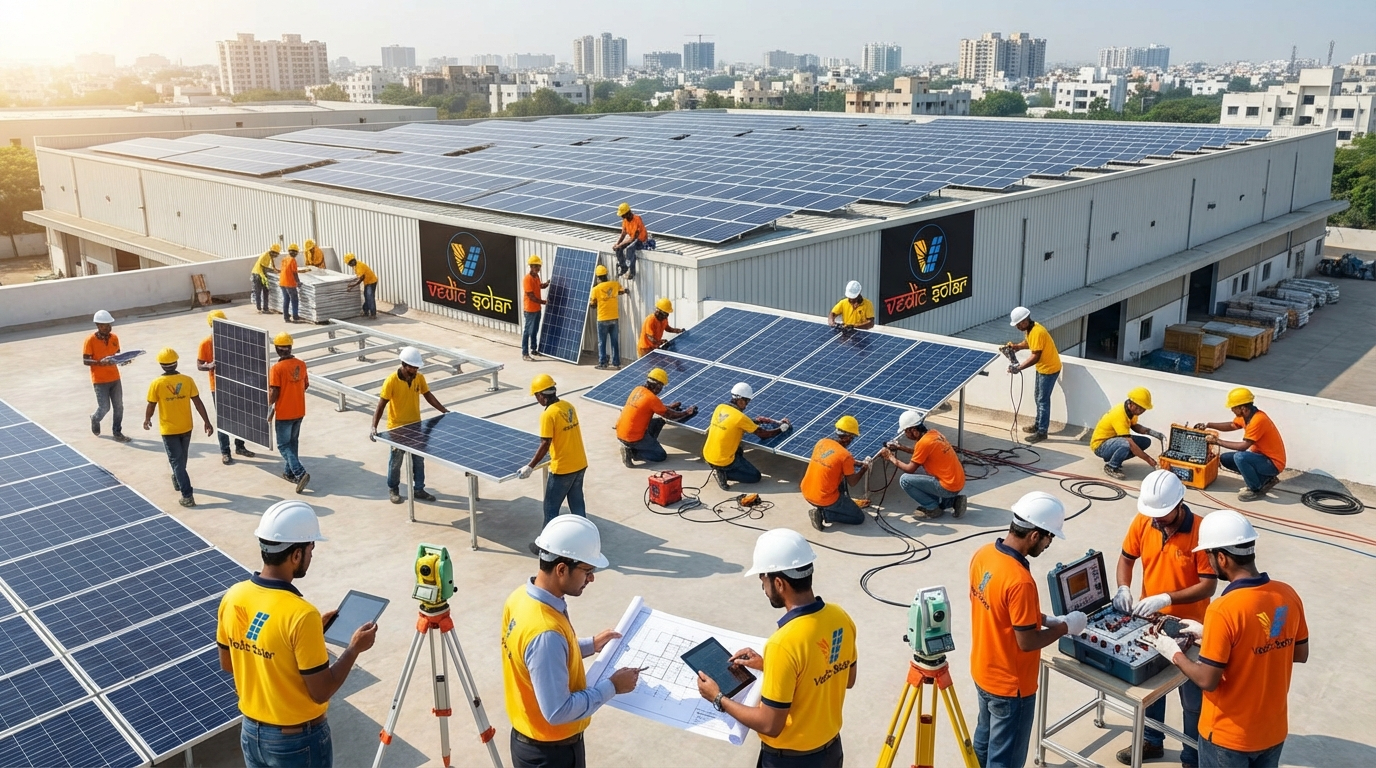
The EPC (Engineering, Procurement, and Construction) workflow defines the technical and operational backbone of every industrial rooftop solar project. For EPC contractors and electrical engineers working in West Bengal, understanding this workflow ensures smooth inter-disciplinary coordination, avoids regulatory delays, and enhances project profitability.
Below is a clear, engineering-oriented walkthrough of the full EPC pipeline as implemented by Vedic Solar for C&I clients.
1. Engineering Phase
1.1 Site survey & feasibility
The engineering workflow begins only after a structured survey (covered in Blog 1). Core deliverables include:
- Feasibility report
- Preliminary array design
- Tentative capacity estimate
- Interconnection feasibility
- Initial risk register
1.2 Detailed design & modeling
Using PVsyst/Helioscope/SolarPro, generate:
- Final capacity utilization based on shading
- String sizing and inverter mapping
- DC/AC ratio selection
- Cable sizing & voltage-drop analysis
- Protection scheme
- SLD (CEIG-ready)
- Earthing & lightning layout
- Structural analysis
1.3 DISCOM application & CEIG compliance
In West Bengal, rooftop systems >500 kW generally require CEIG approval.
Prepare:
- Technical datasheets
- Drawings compliant with CEA Regulations
- Protection coordination sheet
- Compliance certificates
Vedic Solar typically plans a 2–4 week approval cycle depending on DISCOM workload.
2. Procurement Phase
Procurement determines system reliability and long-term O&M outcomes.
2.1 Vendor qualification
Shortlist suppliers based on:
- BIS certification (mandatory for modules & inverters)
- NABL-accredited test reports
- Past performance in humid/coastal climates
- Delivery timelines
2.2 Material selection
Key components:
- Mono PERC / N-type modules
- String/central inverters
- Hot-dip galvanized structures
- DC/AC cables (IS 1584/694 compliance)
- Earthing kits & surge protection devices
- ACDB/DCDB
In West Bengal, high humidity and salt exposure demand strict attention to coating thickness on structures (minimum 80 microns HDG recommended).
2.3 Logistics & staging
Plan material flow to avoid roof congestion:
- Batch delivery schedules
- Secure storage for modules
- Dedicated zones for structure assembly
EPC teams benefit from creating a 3-stage procurement tracker: PO → Dispatch → GRN.
3. Construction Phase
3.1 Site readiness
Before installation:
- Install lifeline systems
- Mark restricted zones
- Conduct toolbox safety meetings
- Set up material lifts (where roofs are >12 m high)
3.2 Mounting structure installation
Check:
- Roof alignment
- Purlin strength
- Fastener torque
- Rail straightness
For RCC roofs, ballast calculations must ensure wind loads per IS 875.
3.3 Module installation
Ensure:
- Module orientation consistency
- Torque per manufacturer specs
- UV-protected cable management
- No module mid-span flex
3.4 DC & AC wiring
Implement:
- Adequate bending radius
- Segregation of AC/DC trenches
- Surge protection installation
- Earthing pits verification (≤1 ohm target, site-dependent)
3.5 Inverter installation
Requirements:
- Ventilation or external IP65 placement
- Proper cable lugging
- MCCB/ACB interconnection
- CT/PT orientation checks
4. Testing, Commissioning & Handover
4.1 Pre-commissioning tests
- Module IV curve sampling
- String polarity checks
- Insulation resistance
- Continuity & earthing verification
- Inverter parameter configuration
4.2 Synchronization & grid compliance
Coordinate with:
- DISCOM officials
- Factory electrical team
- CEIG inspector
Record:
- No-load and full-load inverter behavior
- Protection relay trip tests
- Initial PR% and yield assessment
4.3 Documentation & training
Handover packet includes:
- As-built SLD
- Test reports
- Warranty papers
- Module serial numbers
- Maintenance manual
- SCADA login credentials
Vedic Solar typically conducts a hands-on training session for factory electricians to ensure operational readiness.
5. Post-Commissioning
5.1 Monitoring & O&M planning
Define:
- Daily generation checks
- Fault escalation matrix
- Preventive maintenance schedule
- Inverter firmware update cycles
5.2 Performance evaluation
Collect 1–3 months of generation data to validate:
- Expected energy yield
- Loss breakdown
- PR% stability
This is essential before locking AMC scopes.
Conclusion
A well-executed EPC workflow integrates precise engineering, disciplined procurement, and structured construction management. For industrial projects in West Bengal, Vedic Solar’s process ensures predictable performance, rapid approvals, and long-term asset reliability—critical for EPC contractors and electrical engineers delivering high-quality rooftop systems.